
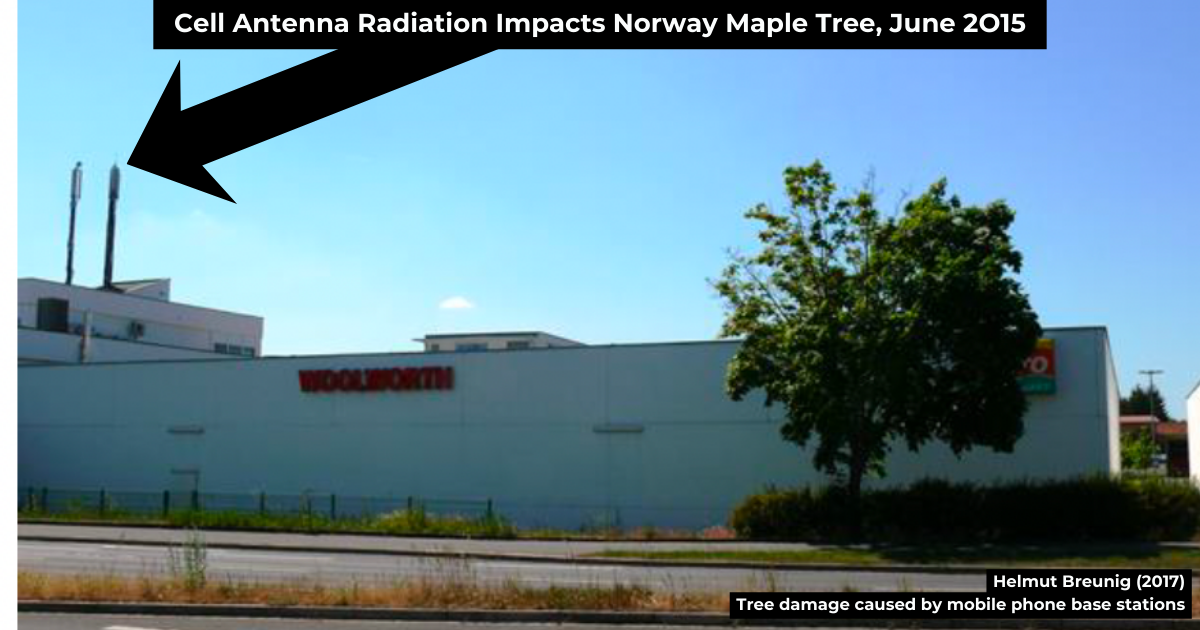
The wireless buildout is accelerating with cell towers, rooftop antennas, and thousands of 4G/5G “small cell” sites mounted on poles, streetlights, and buildings. As networks expand, scientists have documented measurable impacts to trees from aggressive trimming, root disturbance, and tree removal. But there’s another issue that tree professionals and scientists are increasingly flagging: the impact of radiofrequency (RF) radiation emitted by cell towers and wireless networks.
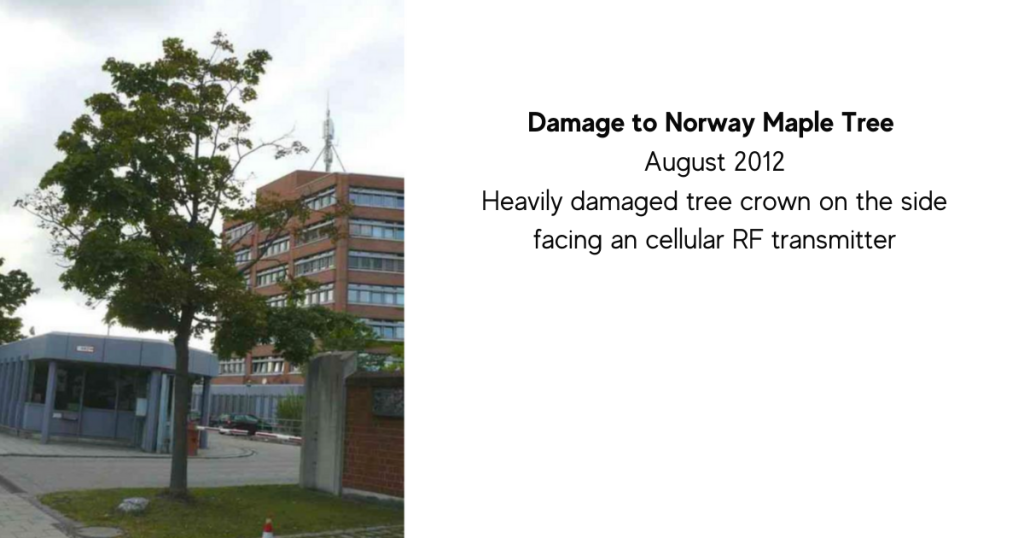
There is growing scientific indication that radiofrequency (RF) radiation from cell towers can harm trees. Field observations and peer-reviewed research have reported patterns of tree crown damage near base stations, often starting on the side facing the antennas, and further, experimental studies suggest RF radiation exposure can alter plant growth and stress responses.
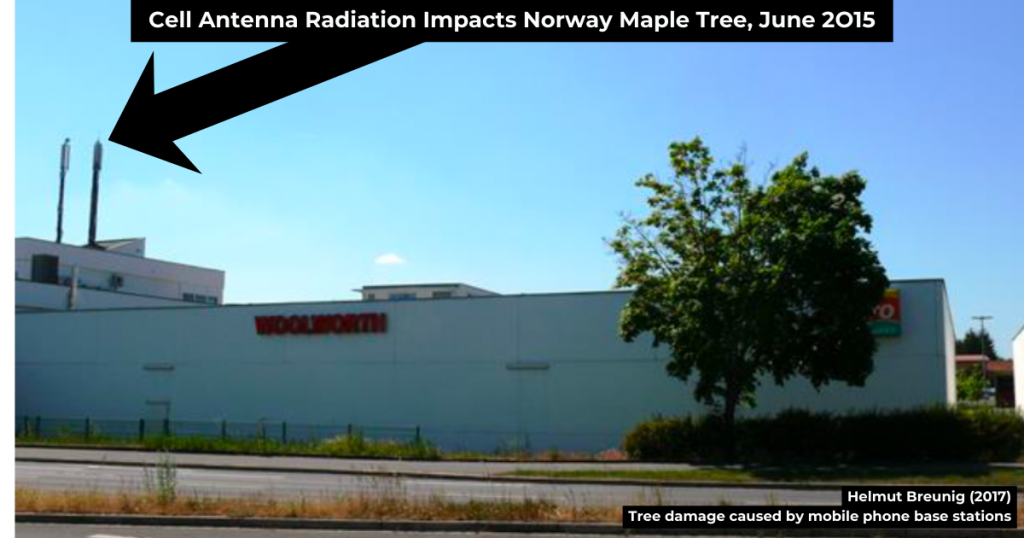
Numerous studies report impacts to trees and plants. Here are a few important studies to know.
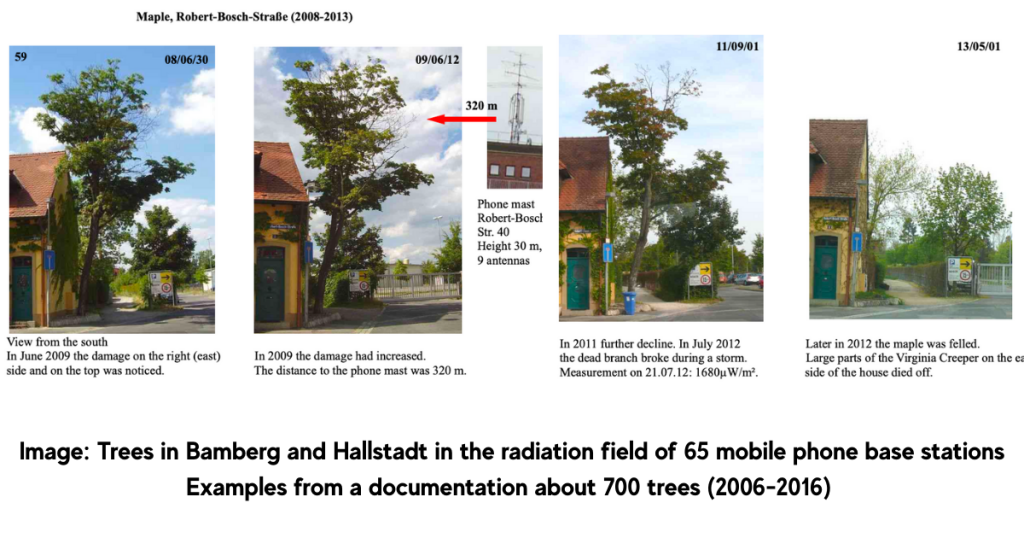
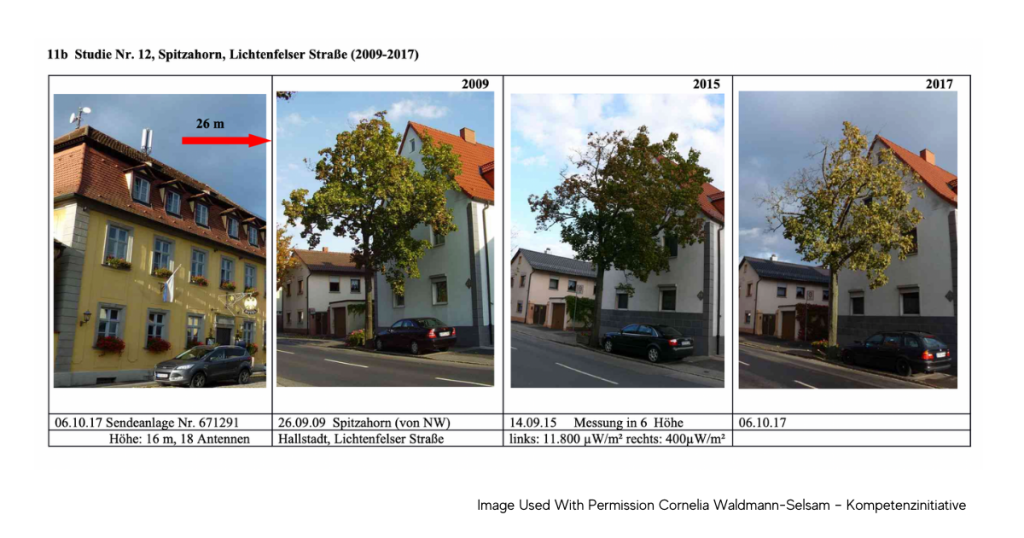
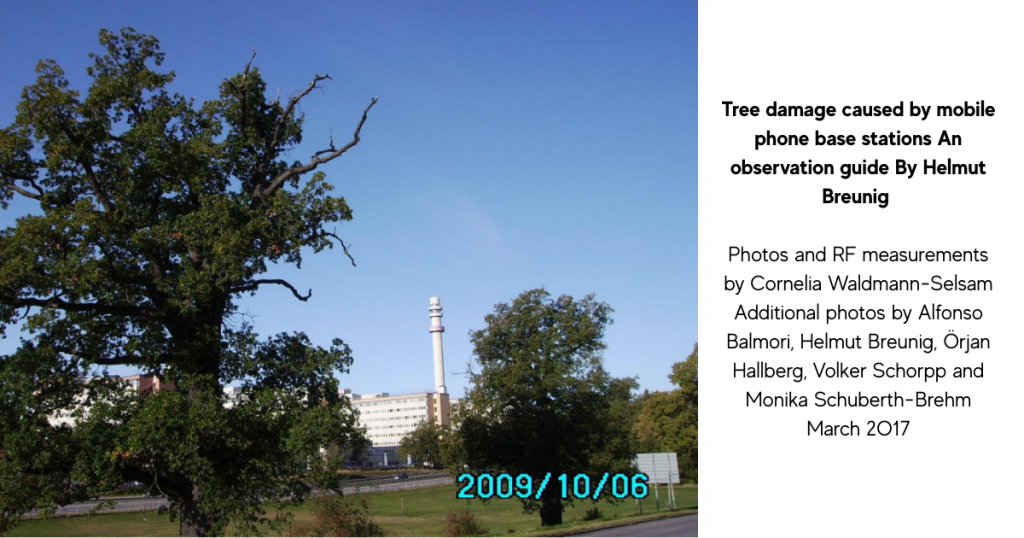
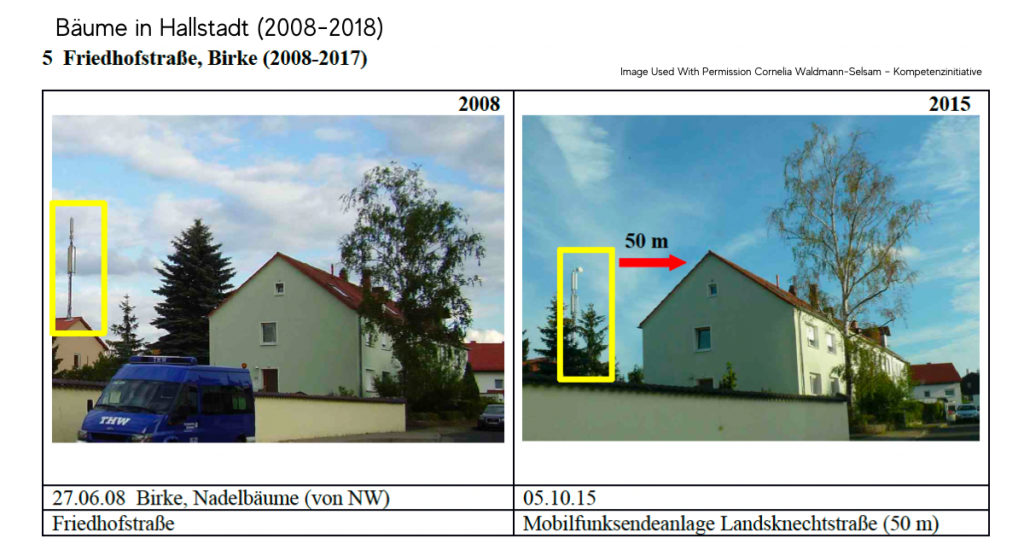
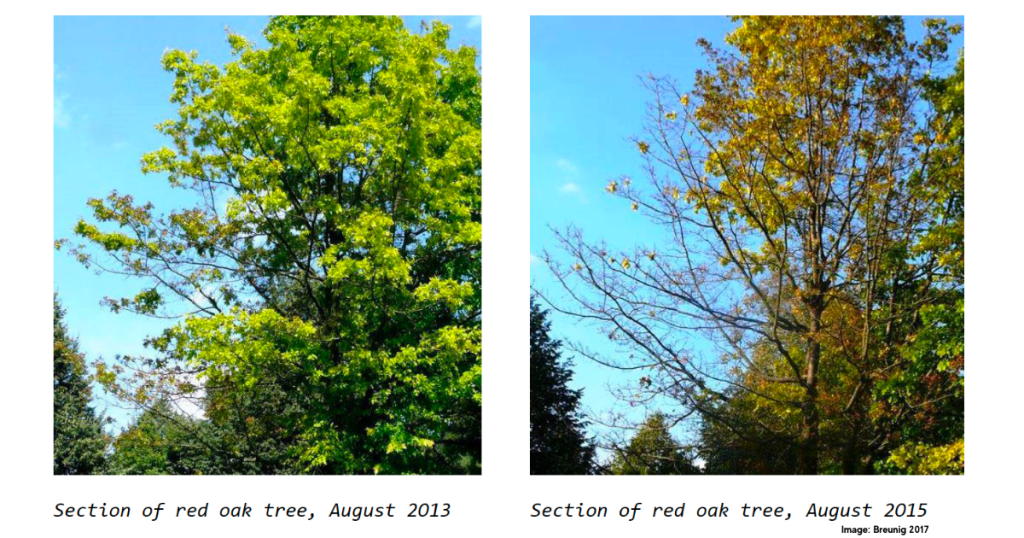
A field monitoring study of over 100 trees followed for nine years and published in Science of the Total Environment by Waldmann- Selsam et al. reported damage to trees exposed to cell tower and wireless (mobile phone) network base station antennas. The researchers described a pattern in which injury often begins as crown damage, with leaf edges bleaching and drying, and then progresses over time, spreading from the antenna-facing (more-exposed) side of the tree toward the less-exposed side. In many cases, the trees’ health progressively declined until trees were ultimately removed or died.
- In 2016, the study “Radiofrequency radiation injures trees around mobile phone base stations” was published in Science of the Total Environment.
- The authors also released a PDF with photos of the trees in the study “Bamberg and Hallstadt in the radiation field of 65 mobile phone base stations: Examples from a documentation about 700 trees (2006-2016).”
- In 2021, the authors released an updated photo booklet Tree Damage Caused by Radiofrequency Radiation (2005–2021) compiling 16 years of photo-documented field observations showing consistent tree injury patterns near transmitters.

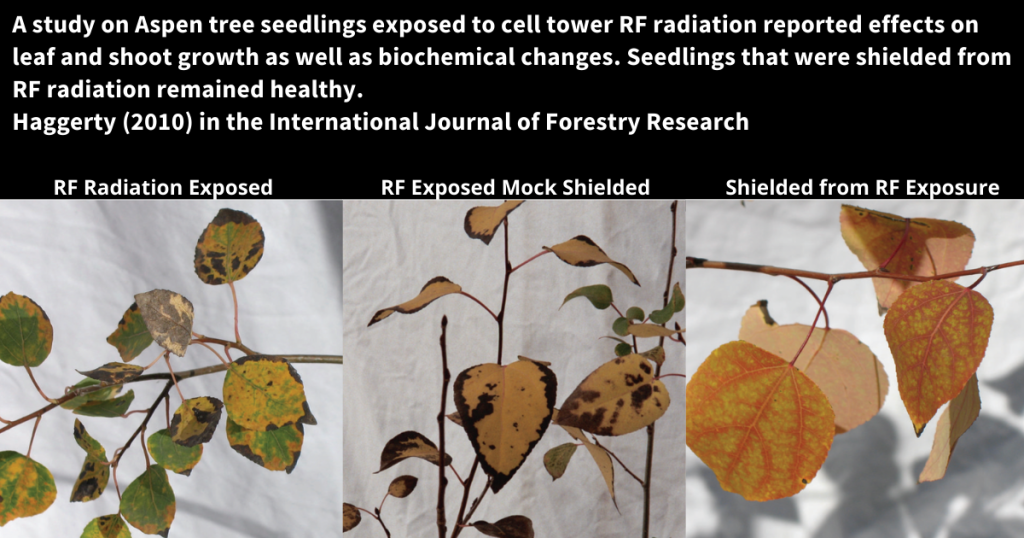
Earlier research published in the International Journal of Forestry Research on trembling aspen seedlings near Lyons, Colorado found that exposure to background radiofrequency (RF) levels was associated with slower leaf and shoot growth and changes in fall anthocyanin production—a protective pigment involved in stress response and seasonal leaf processes. The author concluded that ambient RF background exposure may be contributing to aspen decline in the state.
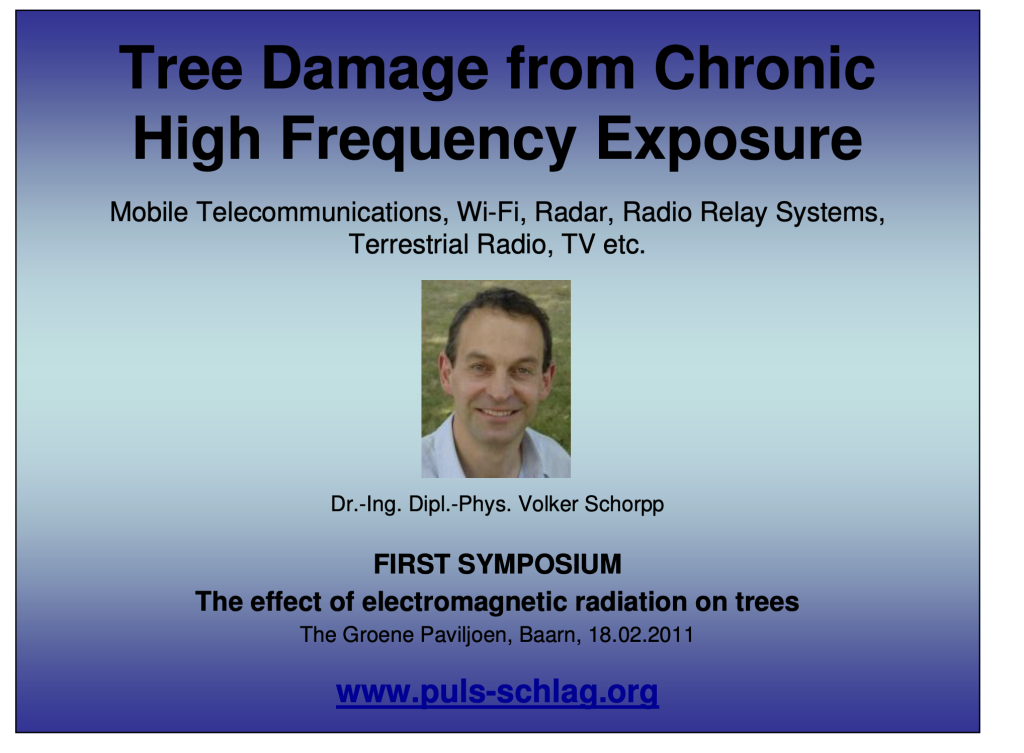
The first International Conference on EMF Impacts to Trees was held on February 18, 2011 at the Groene Paviljoen in Baarn, Netherlands, bringing together national and international speakers to present research and field observations on how electromagnetic exposures may relate to tree decline. (PDF of flyer)
Watch the video recording of the event here. Physicist Dr. Volker Schorpp’ presented on “Tree Damage from Chronic High Frequency Exposure (Mobile Telecommunications, Wi-Fi, Radar, Radio Relay Systems, Terrestrial Radio, TV, etc.). PDF of his presentation.
Why tree canopy matters
Healthy trees are essential infrastructure. They help:
- capture air pollution and improve air quality
- cool neighborhoods and reduce energy demand
- remove carbon dioxide and release oxygen
- reduce flooding and protect soil health
- provide habitat for birds and wildlife
When tree canopy is reduced—or when trees are weakened and decline—communities lose these benefits for years.
The Tree Care Industry Magazine’s article on the occupational hazards faced by tree care workers including how “the latest threat is the proliferation of the so-called 5G, or Fifth Generation, cellular-phone networking…” The article described how workers are getting exposed and injured from the transmitters.. If workers are getting exposed, what about the trees they are working on?
Trees absorb wireless frequencies
Even the telecom industry acknowledges that trees don’t just “sit next to” wireless signals—they can absorb, scatter, and weaken them, especially at higher-frequency 5G bands that don’t travel as far. In Australia, telecom giant Telstra publicly described funding research into whether local flora could disrupt 5G performance, noting that “uniquely Australian obstacles – including flora – will disrupt 5G signals.” They pointed specifically to gumtrees, explaining that earlier generations of wireless standards already showed “how gumtrees impact those radio signals” as they travel “from the radio tower to the end user.” (The Sydney Morning Herald)
Plants are sensitive to wireless frequencies
Large reviews of plant studies report that biological effects from RF-EMF exposure are commonly observed across many species. Reported effects include:
- altered growth and development
- oxidative stress markers
- thinner cell walls and changes in cell structures
- altered gene expression
- impacts on metabolic activity and stress response pathways
One published analysis of 45 peer-reviewed publications (1996–2016) concluded the majority of studies reported physiological and/or morphological effects, and identified several crops and common plants as particularly sensitive in published experiments (including maize, pea, tomato, onion, and others). Studies have continued to report impacts to plants.
Numerous reviews document impacts from RF and non-ionizing EMF radiation.
“As far as the effects on green plants are concerned in this review, alterations in their morphological characteristics like overall growth, canopy density, and pigmentation to physiological variations like chlorophyll fluorescence and change in membrane potential etc. have been found to be affected by cellular radiation. On the other hand, elevated oxidative status of the cell, macromolecular damage, and lipid peroxidation have been found frequently. On the chromosomal level, micronuclei formation, spindle detachments, and increased mitotic indexes etc. have been noticed. Transcription factors were found to be overexpressed in many cases due to the cellular radiation impact, which shows effects at the molecular level.”
-Panda et al. Review on the impact of cell phone radiation effects on green plants. Environ Monit Assess (2024)
“Here, we propose that the main entry point for the biological effects of EMF-r corresponds to an increase in ROS metabolism and cytosolic calcium that leads to various cellular responses including changes in gene expression and/or enzymatic activities, which could ultimately result in immediate cellular alterations or delayed plant growth.”
-Kaur et al. Sensitivity of plants to high frequency electromagnetic radiation: Cellular mechanisms and morphological changes. Reviews in Environmental Science and Bio/Technology (2021)
Key Science Resources
Waldmann-Selsam, C., et al. “Radiofrequency radiation injures trees around mobile phone base stations.” Science of the Total Environment 572 (2016): 554-69.
- Tree Damage Caused by Radiofrequency Radiation 2005–2021
- Tree Damage Observation Guide 2017 by Breunig, Helmut.
Halgamuge, M. N. (2017). Review: Weak radiofrequency radiation exposure from mobile phone radiation on plants. Electromagnetic Biology and Medicine, 36(2), 213–235.
Haggerty, K. (2010). Adverse Influence of Radio Frequency Background on Trembling Aspen Seedlings: Preliminary Observations. International Journal of Forestry Research, 836278.
Kaur, S., Vian, A., Chandel, S., Singh, D. H., Batish, D., & Kohli, R. (2021). Sensitivity of plants to high frequency electromagnetic radiation: Cellular mechanisms and morphological changes. Reviews in Environmental Science and Bio/Technology, 20.
Panda DK, Das DP, Behera SK, Dhal NK. Review on the impact of cell phone radiation effects on green plants. Environ Monit Assess. 2024 May 21;196(6):565
Vian A, Davies E, Gendraud M, Bonnet P. Plant Responses to High Frequency Electromagnetic Fields. Biomed Res Int. 2016;2016
Zhong, Z., Wang, X., Yin, X., Tian, J., & Komatsu, S. (2021). Morphophysiological and Proteomic Responses on Plants of Irradiation with Electromagnetic Waves. International Journal of Molecular Sciences, 22(22), Article 22.
Pall. M., Electromagnetic Fields Act Similarly in Plants as in Animals: Probable Activation of Calcium Channels via Their Voltage Sensor, Current Chemical Biology, 2016, 10, 74-82