
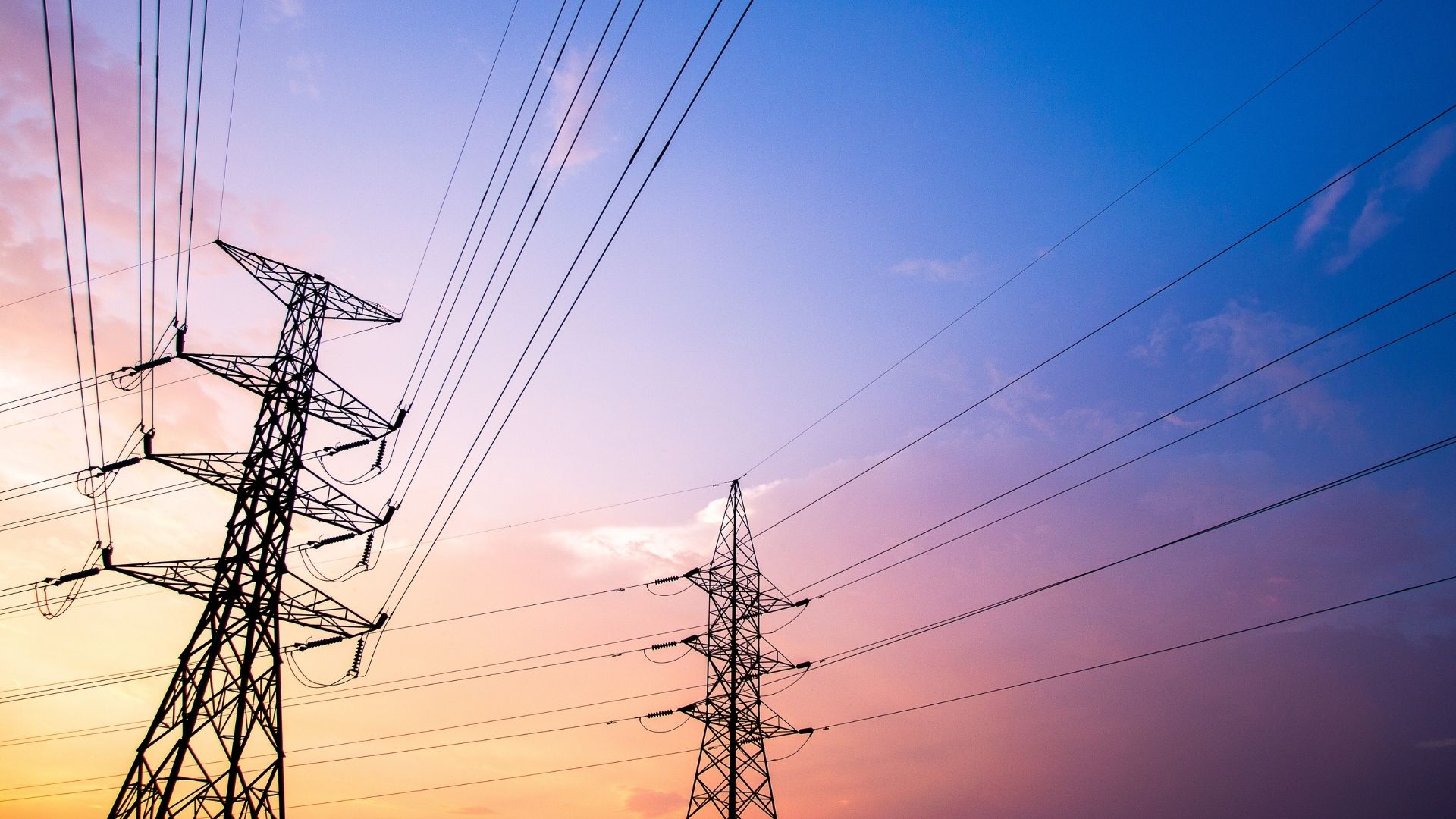
The unprecedented growth of data centers is driving an unprecedented expansion of high-voltage transmission lines, substations, and other electrical infrastructure across the nation to meet rapidly increasing power demand. Local governments are increasingly requesting detailed information about EMF exposure, health impacts, and environmental effects before projects move forward.
For example, in Virginia, Louisa County recently asked a transmission developer to disclose projected magnetic field levels at various distances from a proposed 765 kV transmission line and identify all studies relied upon regarding EMF and health effects as well as regarding impacts on livestock and pollinators such as honey bees.
The letter from Louisa County Virginia, asks:
Identify each study, by author, title, date, and sponsor, on which Valley Link will rely before the Commission concerning electric and magnetic field exposure from 765 kV operation, and produce each. State the calculated magnetic field strength, in milligauss, at the edge of the right-of-way and at 100, 300, and 500 feet from the centerline under normal and peak loading. State whether Valley Link contends that long-term residential exposure at those levels presents no health risk, and the specific scientific basis for that contention
Identify any study, report, or analysis in the possession of Valley Link or its parent companies that reports an adverse association between high-voltage transmission line exposure and human health, livestock health, or agricultural productivity, and produce each. If you decline to produce any such document, identify it and state the basis for withholding it.
Identify the studies Valley Link will rely on concerning effects of 765 kV operation on pollinators, including honey bee colonies, on livestock, and on avian mortality, and produce each. If no such studies have been identified, confirm that.
New York Requires EMF Modeling: There Should Be Full Transparency
New York regulations require applicants for major transmission projects to prepare detailed EMF studies that model:
- Existing (“base case”) EMF levels
- Proposed EMF levels
- Multiple loading conditions
- EMF levels out to 500 feet beyond the right-of-way
- Distances to nearby homes and occupied buildings
There is a lack of accountability for health and safety from the EMFs of powerlines and substations.
Unlike air pollution, noise, or water quality, there are currently no federal setback requirements for homes, schools, or parks near high voltage transmission lines and substations based on EMF exposure. The U.S. does not have any federal safety standards for human exposure to the electric and magnetic fields emitted by electric power lines and substations.
At the same time, a growing body of scientific research has reported associations between long-term EMF exposure and health outcomes including childhood leukemia, neurodegenerative diseases such as Alzheimer’s disease and dementia, and reproductive effects such as miscarriage. In addition, numerous studies have reported impacts to wildlife, including to honeybees.
The industry developed limits if the IEEE are only designed to prevent short-term effects, like nerve or heart stimulation, and do not address long-term health risks. This is why several countries have policies to minimize exposure down to below the 4mG EMF magnetic field level linked to childhood cancer.
Communities deserve full transparency regarding existing EMF levels, projected increases from new electrical grid infrastructure, and the measures being taken to reduce exposure. Access to this technical information allows residents, policymakers, and developers to make informed decisions about projects that may affect neighborhoods for decades to come.
Recommended Questions to Ask When a Power Line or Substation Is Proposed Near Your Home or Community
Baseline EMF Measurements
- What are the current EMF levels in milligauss at nearby homes, schools, parks, and property lines before construction begins?
- Send the baseline measurements, with details on the date and load details when EMF measurements were taken
Projected EMF Increases
- What EMF levels are expected after the project is operating? Will there be increases, and if so, by how much?
- What are the highest EMF levels expected during peak electrical demand?
- How far from the transmission line, substation, or data center do elevated EMF levels extend?
- Can you provide EMF modeling showing field levels at different distances from the project?
- What design measures are being used to mitigate EMF exposure for nearby residents, schools, and businesses?
- If future equipment is added or electrical demand increases, how will EMF levels change? Has this been evaluated.
- What setback distance or EMF limit was used to determine that the project is safe for nearby residents?
Post-Construction Monitoring
- Will post-construction EMF measurements be performed, and will the results be publicly available?
- Will there be ongoing EMF monitoring (yearly?) after the facility is operational, and who will be responsible for that monitoring?
Transparency
- Where can residents access the EMF studies, modeling reports and measurement data related to the project?
- Will all future EMF measurement reports and monitoring results be made publicly available? If so, where.
- If measured EMF levels exceed projections, what corrective actions will be taken and how will the public be notified?
- If the company concludes that the projected EMF levels present no health risk to humans, livestock, wildlife including pollinators, what specific scientific evidence and studies support that conclusion?
Safety
- What scientific studies are being relied upon to support claims that the projected EMF levels are safe for nearby residents? List full scientific studies with links.
- Have the projected EMF levels been compared to the 4 mG magnetic field level that has been associated with increased childhood leukemia risk in multiple epidemiological studies?
Agriculture, and Wildlife
- What scientific studies are being relied upon to support claims that the projected EMF levels are safe for livestock and wildlife? List all scientific studies with links.
- Have any studies been conducted evaluating potential impacts on livestock, horses, dairy operations, or agricultural productivity in the vicinity of the project?
- Have any studies been conducted evaluating potential impacts on pollinators, including honey bees and native bee populations?
- Have any studies been conducted evaluating potential impacts on birds and avian mortality?
- Are there any studies, reports, or analyses that have found associations between high-voltage transmission line exposure and adverse effects on human health, livestock health, or agricultural productivity? If so, can they be provided to the public?
Sensitive Populations
- Has the project evaluated potential impacts on individuals with pacemakers, implantable cardioverter defibrillators (ICDs), insulin pumps, cochlear implants, or other implanted medical devices?
- Are any setback distances or special precautions recommended for residents with implanted medical devices?
Examples of letters sent by local governments
Examples of state laws
See New York’s 16 NYCRR § 1001.35 – Exhibit 35: Electric and Magnetic Fields that ensures EMF measurements for electrical grid projects.
In California, new schools must maintain minimum distances from transmission line right-of-ways, as nearby power lines can increase ELF‑EMF exposure. California code states, “The property line of the site, even if it is a joint use agreement as described in subsection (o) of this section, shall be at least the following distance from the edge of respective power line easements:
- 100 feet for 50-133 kV line.
- 150 feet for 220-230 kV line.
- 350 feet for 500-550 kV line.”