
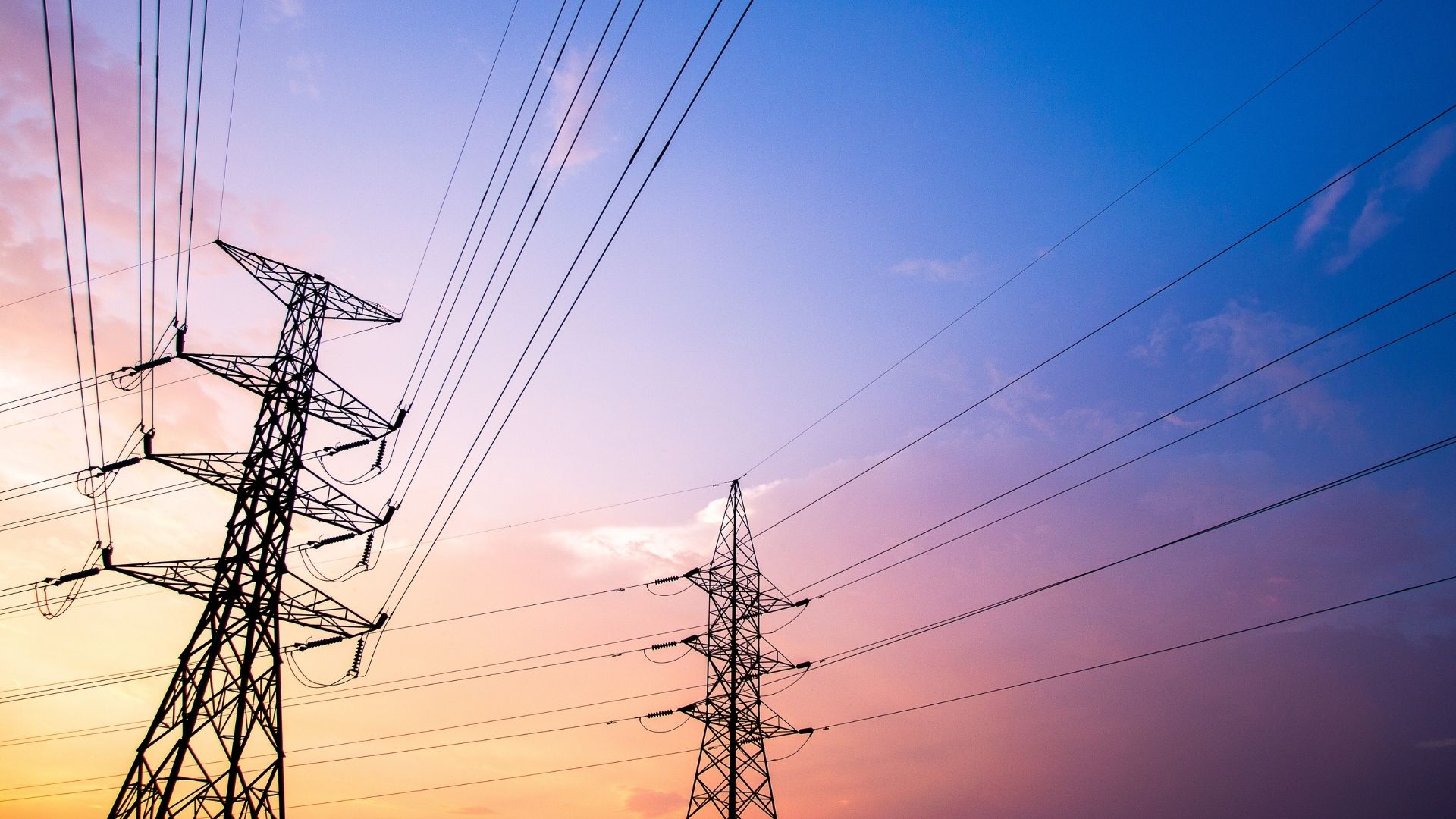
The unprecedented growth of data centers is driving an unprecedented expansion of high-voltage transmission lines, substations, and other electrical infrastructure across the nation to meet rapidly increasing power demand.
Ask Questions → Get Local Government Involved With Resolutions→ Change State Policy.
The Issue with High Voltage Power Line Projects Near Homes, Schools and Farms
To start, there is a lack of accountability for health and safety from the EMFs emitted by powerlines and substations. This is why local community involvement is so important.
A lack of safety regulations: Unlike air pollution, noise, or water quality, there are currently no federal setback requirements for homes, schools, or parks near high voltage transmission lines and substations based on EMF exposure or corona discharge. The U.S. does not have any federal safety standards for human exposure to the electric and magnetic fields emitted by electric power lines and substations.
Scientific research reporting health effects: At the same time, a growing body of scientific research has reported associations between long-term EMF exposure and health outcomes including childhood leukemia, neurodegenerative diseases such as Alzheimer’s disease and dementia, and reproductive effects such as miscarriage. In addition, numerous studies have reported impacts to wildlife, including to honeybees.
Inadequate industry standards: The industry developed limits if the IEEE are only designed to prevent short-term effects, like nerve or heart stimulation, and do not address long-term health risks. This is why several countries have policies to minimize exposure down to below the 4mG EMF magnetic field level linked to childhood cancer.
A lack of requirements for EMF exposures: Most states do not require EMF levels to be measured before and after construction in the areas where people will be impacted- their homes, schools, and farmland. Communities deserve full transparency regarding existing EMF levels, projected increases from new electrical grid infrastructure, and the measures being taken to reduce exposure. Residents and local officials have a right to ask questions, request transparency, and advocate for stronger protections. Local governments are increasingly requesting detailed information about EMF exposure, health impacts, and environmental effects before projects move forward.
Corona discharge: High-voltage power transmission lines generate a strong electric field at the surface of the conductor, which can be strong enough to split the surrounding air molecules, resulting in the emission of electromagnetic energy in the form of ultraviolet and near-ultraviolet light and broadband radio-frequency electromagnetic radiation (EMR) that can interfere with radio and television reception. It can also produce an audible noise that sounds like a hiss.
Like magnetic fields, the corona discharge effects are generally strongest directly beneath and near the transmission line but can extend several hundred feet from the corridor, particularly during rain, fog, snow, or other wet weather conditions. The likelihood and intensity of corona discharge increase with voltage, making it an important consideration for 345-kV, 500-kV, and 765-kV transmission projects.
Stray voltage: High-voltage transmission lines can also can induce voltages on nearby metal fences and irrigation systems, sometimes causing noticeable “startle” shocks when touched.
What You Can Do
- Ask questions and demand transparency
- Get local governments involved with resolutions and action
- Advocate for state laws that ensure transparency, oversight, and public health protections.
1. Ask Questions and Demand Transparency
In Virginia, Louisa County recently asked a transmission developer to disclose projected magnetic field levels at various distances from a proposed 765 kV transmission line and identify all studies relied upon regarding EMF and health effects as well as regarding impacts on livestock and pollinators such as honey bees.
The letter from Louisa County Virginia, asks:
“Identify each study, by author, title, date, and sponsor, on which Valley Link will rely before the Commission concerning electric and magnetic field exposure from 765 kV operation, and produce each. State the calculated magnetic field strength, in milligauss, at the edge of the right-of-way and at 100, 300, and 500 feet from the centerline under normal and peak loading. State whether Valley Link contends that long-term residential exposure at those levels presents no health risk, and the specific scientific basis for that contention
Identify any study, report, or analysis in the possession of Valley Link or its parent companies that reports an adverse association between high-voltage transmission line exposure and human health, livestock health, or agricultural productivity, and produce each. If you decline to produce any such document, identify it and state the basis for withholding it.
Identify the studies Valley Link will rely on concerning effects of 765 kV operation on pollinators, including honey bee colonies, on livestock, and on avian mortality, and produce each. If no such studies have been identified, confirm that.”
Recommended Questions to Ask When a Power Line or Substation Is Proposed Near Your Home or Community
These are questions community members and local officials can ask.
Baseline EMF Measurements
- What are the current EMF levels in milligauss at nearby homes, schools, parks, and property lines before construction begins?
- Send the baseline measurements, with details on the date and load details when EMF measurements were taken
Projected EMF Increases
- What EMF levels are expected after the project is operating? Will there be increases, and if so, by how much?
- What are the highest EMF levels expected during peak electrical demand?
- How far from the transmission line, substation, or data center do elevated EMF levels extend?
- Can you provide EMF modeling showing field levels at different distances from the project?
- What design measures are being used to mitigate EMF exposure for nearby residents, schools, and businesses?
- If future equipment is added or electrical demand increases, how will EMF levels change? Has this been evaluated.
- What setback distance or EMF limit was used to determine that the project is safe for nearby residents?
Post-Construction Monitoring
- Will post-construction EMF measurements be performed, and will the results be publicly available?
- Will there be ongoing EMF monitoring (yearly?) after the facility is operational, and who will be responsible for that monitoring?
Transparency
- Where can residents access the EMF studies, modeling reports and measurement data related to the project?
- Will all future EMF measurement reports and monitoring results be made publicly available? If so, where.
- If measured EMF levels exceed projections, what corrective actions will be taken and how will the public be notified?
- If the company concludes that the projected EMF levels present no health risk to humans, livestock, wildlife including pollinators, what specific scientific evidence and studies support that conclusion?
Safety
- What scientific studies are being relied upon to support claims that the projected EMF levels are safe for nearby residents? List full scientific studies with links.
- Have the projected EMF levels been compared to the 4 mG magnetic field level that has been associated with increased childhood leukemia risk in multiple epidemiological studies?
Agriculture, and Wildlife
- What scientific studies are being relied upon to support claims that the projected EMF levels are safe for livestock and wildlife? List all scientific studies with links.
- Have any studies been conducted evaluating potential impacts on livestock, horses, dairy operations, or agricultural productivity in the vicinity of the project?
- Have any studies been conducted evaluating potential impacts on pollinators, including honey bees and native bee populations?
- Have any studies been conducted evaluating potential impacts on birds and avian mortality?
- Are there any studies, reports, or analyses that have found associations between high-voltage transmission line exposure and adverse effects on human health, livestock health, or agricultural productivity? If so, can they be provided to the public?
Sensitive Populations
- Has the project evaluated potential impacts on individuals with pacemakers, implantable cardioverter defibrillators (ICDs), insulin pumps, cochlear implants, or other implanted medical devices?
- Are any setback distances or special precautions recommended for residents with implanted medical devices?
Corona discharge: Communities should not only ask how strong these emissions will be, but also how far they will extend from the line. Developers should be required to disclose the expected distance over which corona-related radio interference, audible noise, and other effects may be detectable under both normal and adverse weather conditions.
Induced voltage: A good question to ask a utility is:
“At what distances from the proposed transmission line have induced voltages on fences, irrigation systems, buildings, and farm equipment been modeled, and what mitigation measures will be provided?”
2. Get Local Governments Involved With Resolutions and Action
Local governments can send letters, issues resolutions and advocate to state and federal lawmakers.
Examples of Resolutions on Transmission Lines
- The Town of Sterling, located within Wisconsin’s nationally recognized Driftless Area, adopted Resolution 2026-1 opposing the proposed 765-kV high-voltage transmission line through the town, Vernon County, and the broader Driftless region. The resolution cites concerns about impacts to the area’s unique landscape, agriculture, wildlife, economy, and public health.
- McCulloch County Texas unanimously passed a resolution in opposition to a 765-kV line coming “across, alongside, or through the watershed of the San Saba River.”
- The Barbour County West Virginia Commission 2026 Resolution Expressing Concerns and Opposition to Proposed High-Voltage Transmission Projects which states, “WHEREAS, the transmission project would irreparably harm landowners, farms, forests, communities, ground water, generational and long-standing family properties, environmentally sensitive areas cause negative health effects, reduce property values, damage certain historical properties owned by the Kelley Road Landowners and/or Hunter’s Fork Landowners, alter and/or damage Barbour County as a whole, and forever damage view-sheds to serve out-of-state interests while turning Barbour. County and the entirety of West Virginia into a transmission corridor without delivering any meaningful benefit;”
Local governments can also send letters, like Louisa County, Virginia did, and require EMF modeling, disclosure, and mitigation as part of project review for substations, transmission lines, and data center infrastructure.
3. Advocate for Stronger State Policies
For decades, the federal government has largely failed to address the issue of long-term EMF exposure. The EPA has reviewed the research on powerline EMFs for decades. In 1990, the EPA produced the “Evaluation of the Potential Carcinogenicity of Electromagnetic Fields,” which at first classified magnetic field exposure as a potential human carcinogen, then they redrafted the conclusions, and finally, just shelved it. It was never finalized. The EPA was then defunded from the research on developing safety standards. As a result, state and local governments must step up to provide the oversight, transparency, and protections that communities deserve.
However, only a handful of states have adopted electric and magnetic field regulations. While these limits remain above exposure levels associated with cancer, dementia, and miscarriage in some studies, they are substantially lower than the IEEE and ICNIRP guidelines.
What states have limits for electric and magnetic fields from power lines and substations?
Short answer. Very few. This is why the issue is so important.
Florida and New York have established regulations for magnetic fields, and California restricts high voltage powerlines near schools. Seven states have specific electric-field limits that apply to transmission lines: Florida, Minnesota, Montana, New Jersey, New York, North Dakota, and Oregon.
Communities can also look to international examples. Several European countries, including Switzerland, Italy, Belgium, and regions of Spain, have adopted precautionary policies for new transmission lines and sensitive locations that generally seek to keep long-term magnetic field exposures near homes and schools below approximately 3–4 mG (0.3–0.4 µT), levels associated with childhood leukemia.
New York: New York’s 16 NYCRR § 1001.35 – Exhibit 35: Electric and Magnetic Fields that ensures EMF measurements for electrical grid projects. The New York State Public Service Commission (NYSPSC) limits magnetic fields from new major transmission lines to 200 milligauss (mG), a level far lower than the ICNIRP or IEEE limit for magnetic field. This standard is measured at 1 meter above the ground at the edge of the transmission line’s Right-of-Way (ROW). New York regulations also require applicants for major transmission projects to prepare detailed EMF studies that model:
- Existing (“base case”) EMF levels
- Proposed EMF levels
- Multiple loading conditions
- EMF levels out to 500 feet beyond the right-of-way
- Distances to nearby homes and occupied buildings
California: The California Public Utilities Commission (CPUC) requires all utilities to implement “no-cost and low-cost” EMF mitigation (up to 15% of total project cost) to reduce field exposure by at least 15% at the edge of the right-of-way.
In California, new schools must also maintain minimum distances from transmission line right-of-ways, as nearby power lines can increase ELF‑EMF exposure. California code states, “The property line of the site, even if it is a joint use agreement as described in subsection (o) of this section, shall be at least the following distance from the edge of respective power line easements:
- 100 feet for 50-133 kV line.
- 150 feet for 220-230 kV line.
- 350 feet for a 500-550 kV line.”
Florida: Electric and magnetic fields (EMF) from electrical transmission lines, are regulated under the provisions of Section 403.061(30), Florida Statutes and the rule is 62-814, Florida Administrative Code. 150 to 250 mG (far lower than ICNIRP and IEEE limits) is the maximum allowed at the edge of the right-of-way, depending on line voltage. Compliance with the EMF standards is demonstrated through monitoring and reporting by the utilities.