

PRESS RELEASE
Nationwide Petition Challenges FCC Proposal to Fast Track Cell Tower Deployment and Strip Local Control Over Cell Tower Siting
Florida Mother’s Fight Against Cell Tower Built Near Her Children’s Bedroom Mirrors a Movement Gaining National Momentum
Petition comes as the FCC proposes sweeping new rules to fast-track cell tower builds, which would strip city, state, and county authority over cell tower siting.
MIAMI, FL, November 18, 2025 — The non-partisan, non-profit organization Environmental Health Sciences is launching a nationwide campaign urging the FCC to preserve local control and halt its sweeping new proposals to fast-track cell tower construction near homes. The campaign features a petition centering on the “David v Goliath” story of Lissette Monzon, a mother from Miami-Dade County, Florida, who is fighting to remove a newly built cell tower just steps from her children’s bedroom. She warns that what happened to her family could soon happen to families nationwide if the FCC proposals are successful. The FCC is seeking public comments on its proposal “Build America: Eliminating Barriers to Wireless Deployments” which would preempt town, city, and state authority and speed tower approvals.
“I do not want this to happen to any other family,” said Monzon. “Our community is being littered with 5G towers planted just feet from their homes. The FCC’s new 2025 proposals could strip away the little local authority we have left for even taller macro cell towers, the huge towers that go up past 100 feet, leaving families like mine powerless.”
Monzon is part of a statewide movement that formed the Florida Coalition for Safe Technology, which is working towards more responsible cell tower placement due to the numerous health and safety issues of cell towers.
Community concern over cell tower placement is rising across the country, with recent stories from California, Arkansas, and New York highlighting community battles.
“Across America, residents have been working to protect their communities from irresponsibly placed cell towers by enacting common-sense ordinances to ensure cell tower placement matches community values. However, the FCC is poised to preempt many of these protections, which would leave residents with few to no options. Local authorities would likely be forced to rubber-stamp most cell tower applications as their ability to review applications properly would be limited by tight shot clocks and capped fees if this passes,” stated Theodora Scarato, Director of the Environmental Health Sciences’ Wireless and EMF Program. “No community should be forced to accept corporate infrastructure that affects their family’s neighborhood without having a voice in the decision-making process.”
As soon as the FCC proposal is published in the Federal Register, the public will have only 30 days to comment, and just 15 additional days for reply comments. Environmental Health Sciences will file the petition and has created a detailed resource page on the FCC proposal. The organization has long raised awareness on cell tower health and safety issues.
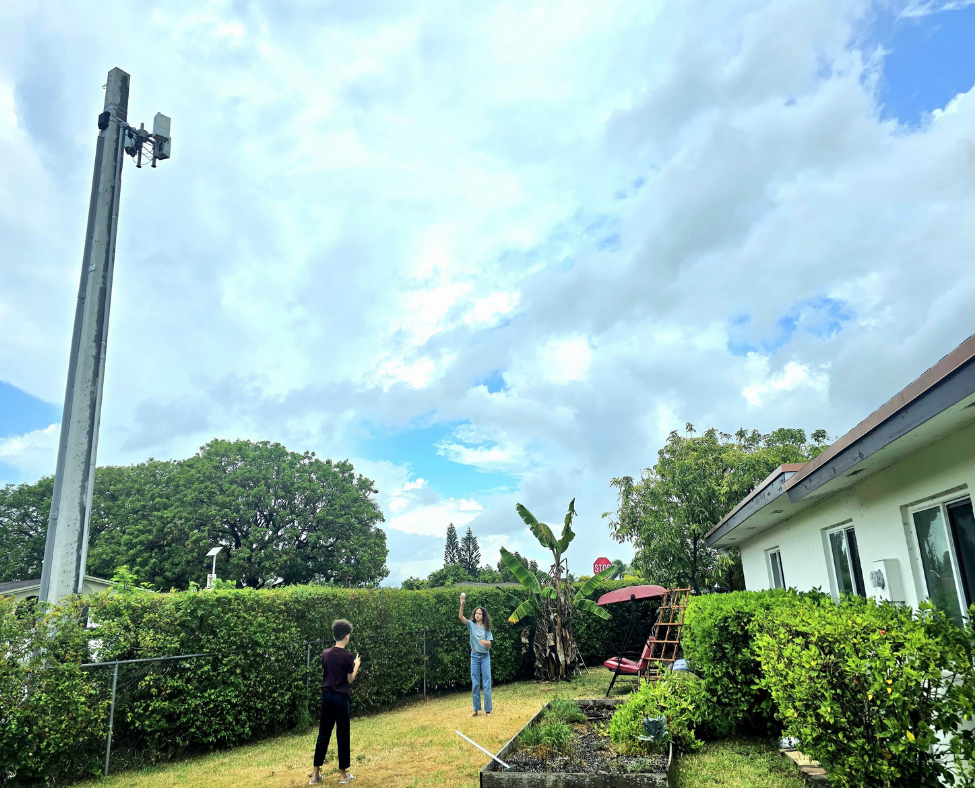
A Mother’s Message in Support of This Petition
Last year, I was shocked to discover that a new cell tower was erected right outside my home, just steps from my children’s bedroom.
There are serious health and safety issues being raised by experts about cell towers placed so close to our homes, yet newly proposed federal rules could fast-track such situations.
As I joined my neighbors to advocate for the cell tower to be moved further away from our home, I quickly learned that the laws seemed to favor the telecommunications companies, rather than our voices. I’ve since met people in many other towns across the U.S. facing the same situation — families who discover a cell tower is being built in their neighborhood, or on their child’s school playground, without notice or a way to stop it.
Now, the Federal Communications Commission (FCC) is considering sweeping new rules in Docket 25-276 that would fast-track cell tower approvals and limit the authority of city, county, and state governments. The changes would greatly reduce residents’ ability to participate in local decision-making on wireless infrastructure.
In short, the FCC could move to pass federal rules that:
- Strip away local control over where cell towers are built
- Allow cell towers to be placed near homes and schools, even when the community is opposed.
Unlike my town, many cities and counties have adopted common-sense setbacksto distance cell towers away from homes and schools to safeguard residents, preserve property value, and maintain neighborhood character.
I was stunned to learn that U.S. limits for cell tower radiation exposure are outdated. They have not been updated since 1996 — nearly 30 years ago. In 2021, a federal court ordered the FCC to properly explain how its limits are adequate in regards to children’s vulnerability and long-term health effects, yet the agency has not responded to the order. The FCC has a responsibility to ensure its regulations are up to date before opening the floodgates on more cell towers.
If the FCC moves forward with these rules, local safeguards will be overridden,leaving residents with little or no say in where cell towers are built.
This is a fight for healthier communities, for our children, and for the sanctity of our homes. Join me in supporting the Environmental Health Sciences’ petition to FCC Chair Brendan Carr, urging the agency to prioritize community involvement, health, and safety.
Your voice matters — sign this petition to FCC Chair Brendan Carr today and spread the word.
– Lissette, a mother in Miami, Florida
Note: As soon as the new rules are published in the Federal Register, there is a 30-day comment period for the public. This petition below will be sent to the FCC as a comment, including all signatories. Stay updated with the Environmental Health Sciences campaign at this link.
Petition to U.S. Federal Communications Commission Chair Brendan Carr on “Build America” Cell Tower Fast Tracking
We, the undersigned, support preserving local government control over cell tower and wireless infrastructure siting in our communities. We strongly oppose the fast-tracking of cell towers in neighborhoods and near schools and playgrounds by preempting local government rules.
The people deserve a voice in decisions about where and how cell towers and wireless infrastructure are built in their communities.
Local governments and residents must have adequate time to review cell tower applications. The FCC’s proposal to implement strict shot-clock timelines, paired with automatic approvals for cell tower and wireless facility applications, will constrain the ability of local governments to properly review tower applications and limit the public’s opportunity to be fully notified and provide meaningful input.
The Telecommunications Act of 1996 preserves local government authority over the placement, construction, and modification of wireless facilities, subject only to a few narrow limitations. Outside of those limited exceptions, Congress has made clear that communities have the right to establish rules that reflect their unique needs, values, and vision for responsible development.
Setbacks for cell towers and wireless equipment are essential to protect public safety and property values, preserve neighborhood character and historic sites, and prevent construction in environmentally fragile areas. Setback requirements are a fundamental safety measure, as they help prevent injuries and property damage in the event of a structural failure, fire, or collapse, and account for hazards such as falling ice or equipment dislodged during storms.
Instead of fast-tracking cell towers, the FCC should prioritize the democratic process, public health, and safety.
We call on the FCC to:
1. Preserve local government authority over cell towers and wireless infrastructure.
2. Protect city, state, and county governments’ ability to properly review cell tower applications.
3. Ensure meaningful community participation in the decision-making process.
4. Allow local governments to require independent safety assessments.
5. Ensure transparency and oversight for compliance.
6. Safeguard environmental and historic resources by ensuring review of cumulative impacts.
7. Ensure proper review of safety regulations so they reflect modern technologies and current research.
Until the FCC responds to the federal court’s mandate to explain how its 1996 cell tower radiation limits adequately protect public health and the environment (D.C. Circuit in EHT et al. v. FCC), it should not fast-track the proliferation of cell towers, because the public and policymakers must have confidence in the safety of these facilities.
Local governments—not private corporations—are best positioned to make responsible, transparent decisions about the placement of cell towers and wireless infrastructure in their communities. The FCC should not preempt local government authority over cell towers and wireless equipment.
We urge the FCC to protect our communities, preserve local control, and put public health and safety first.
Environmental Health Sciences (EHS) is a scientific nonprofit organization focused on environmental health issues. Our Wireless and EMF Program works to create and disseminate knowledge resources that increase understanding of the health and ecological risks posed by wireless and other non-ionizing EMF exposures, counter industry misinformation, promote safer technology, and support meaningful policy change. Sign up for our Wireless and EMF Program newsletter.