
Download the full fact sheet here:
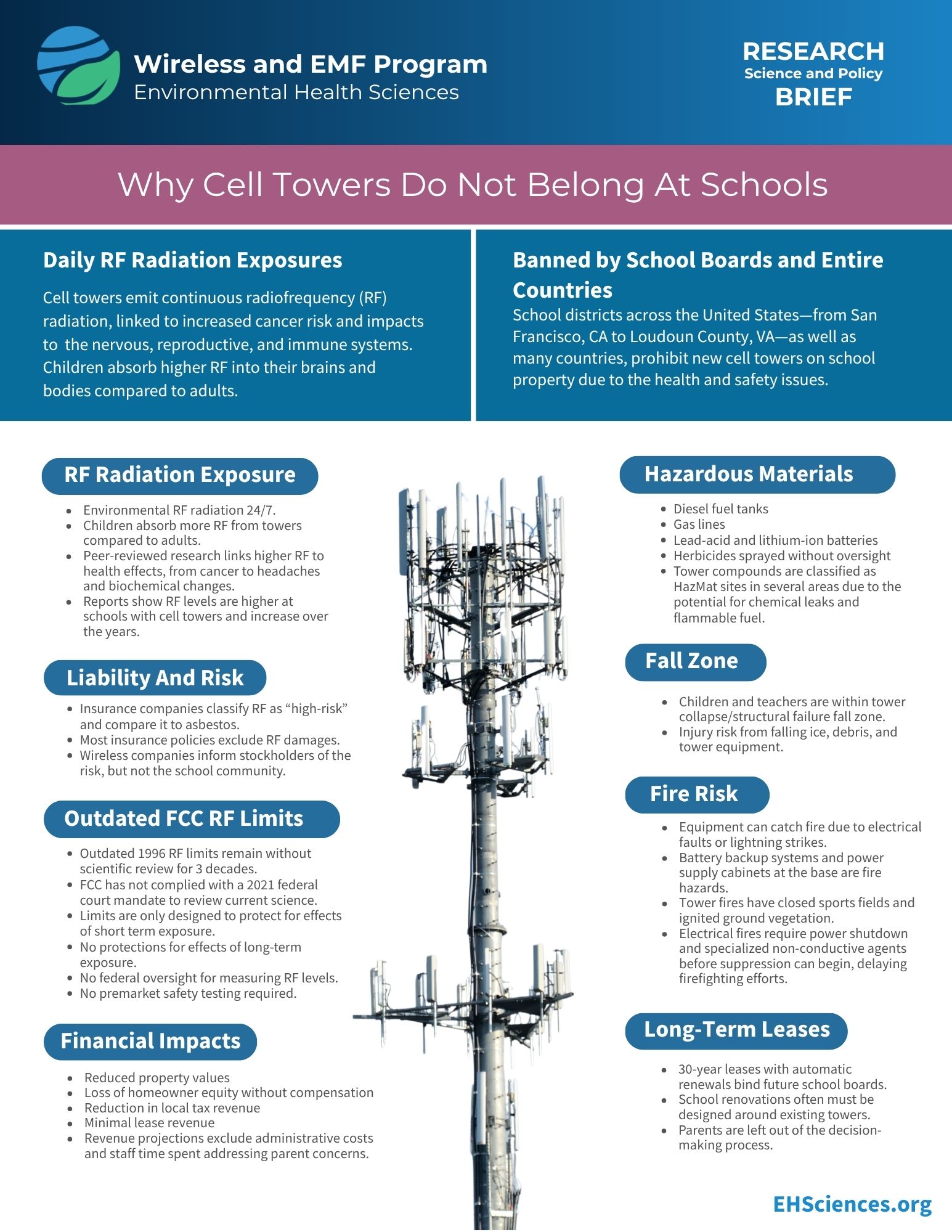
Daily RF Radiation Exposures
Cell towers emit continuous radiofrequency (RF) radiation, linked to increased cancer risk and impacts
to the nervous, reproductive, and immune systems. Children absorb higher RF into their brains and bodies compared to adults.
Banned By School Boards And Entire Countries
School districts across the United Stated — from San Francisco, CA to Loudoun County, VA — as well as many countries, prohibit new cell towers on school property due to the health and safety issues.
RF Radiation Exposure:
- Cell towers emit environmental RF radiation 24/7.
- Children absorb more RF from towers compared to adults.
- Peer-reviewed research links higher RF radiation exposure to health effects, from cancer to headachesand biochemical changes.
- Reports show RF levels are higher at schools with cell towers and increase over the years.
Liability And Risk:
- Insurance companies classify RF radiation as “high-risk” and compare it to asbestos.
- Most insurance policies exclude RF damages.
- Wireless companies inform stockholders of the risk, but not the school community.
Outdated FCC RF Limits:
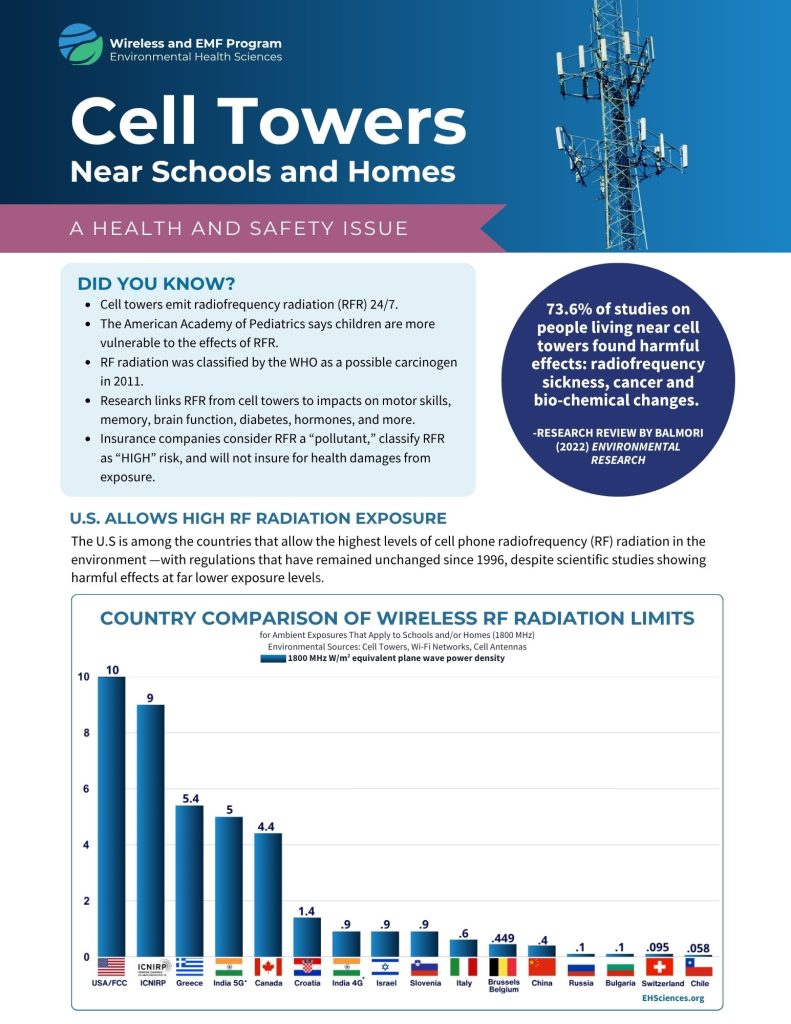
- Outdated U.S. Federal Communications Commission (FCC) 1996 RF limits remain without scientific review for 3 decades.
- FCC has not complied with a 2021 federal court mandate to review current science.
- Limits are only designed to protect for effects of short term exposure.
- No protections for effects of long-term exposure.
- No federal oversight for measuring RF levels.
- No premarket safety testing required.
Financial Impacts:
- Reduced property values
- Loss of homeowner equity without compensation
- Reduction in local tax revenue
- Minimal lease revenue
- Revenue projections exclude administrative costs and staff time spent addressing parent concerns.
Hazardous Materials:
- Diesel fuel tanks
- Gas lines
- Lead-acid and lithium-ion batteries
- Herbicides sprayed without oversight
- Tower compounds are classified as HazMat sites in several areas due to the potential for chemical leaks and flammable fuel.
Fall Zone:
- Children and teachers are within tower collapse/structural failure fall zone.
- Injury risk from falling ice, debris, and tower equipment.
Fire Risk:
- Equipment can catch fire due to electrical faults or lightning strikes.
- Battery backup systems and power supply cabinets at the base are fire hazards.
- Tower fires have closed sports fields and ignited ground vegetation.
- Electrical fires require power shutdown and specialized non-conductive agents before suppression can begin, delaying firefighting efforts.
Long-Term Leases:
- 30-year leases with automatic renewals bind future school boards.
- School renovations often must be designed around existing towers.
- Parents are left out of the decision-making process.
More Cell Tower Resources:
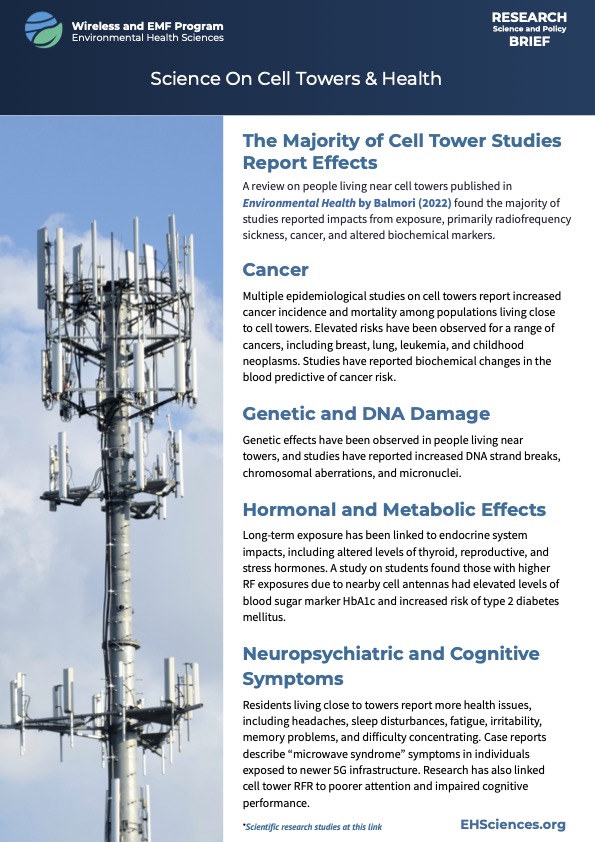
Cell Tower Health Effects: What You Need to Know
Cell Towers at Schools Toolkit: A Parent’s Guide to Safety and Transparency
Top 10 Health, Safety, and Liability Risks of Cell Towers Near Schools and Homes