
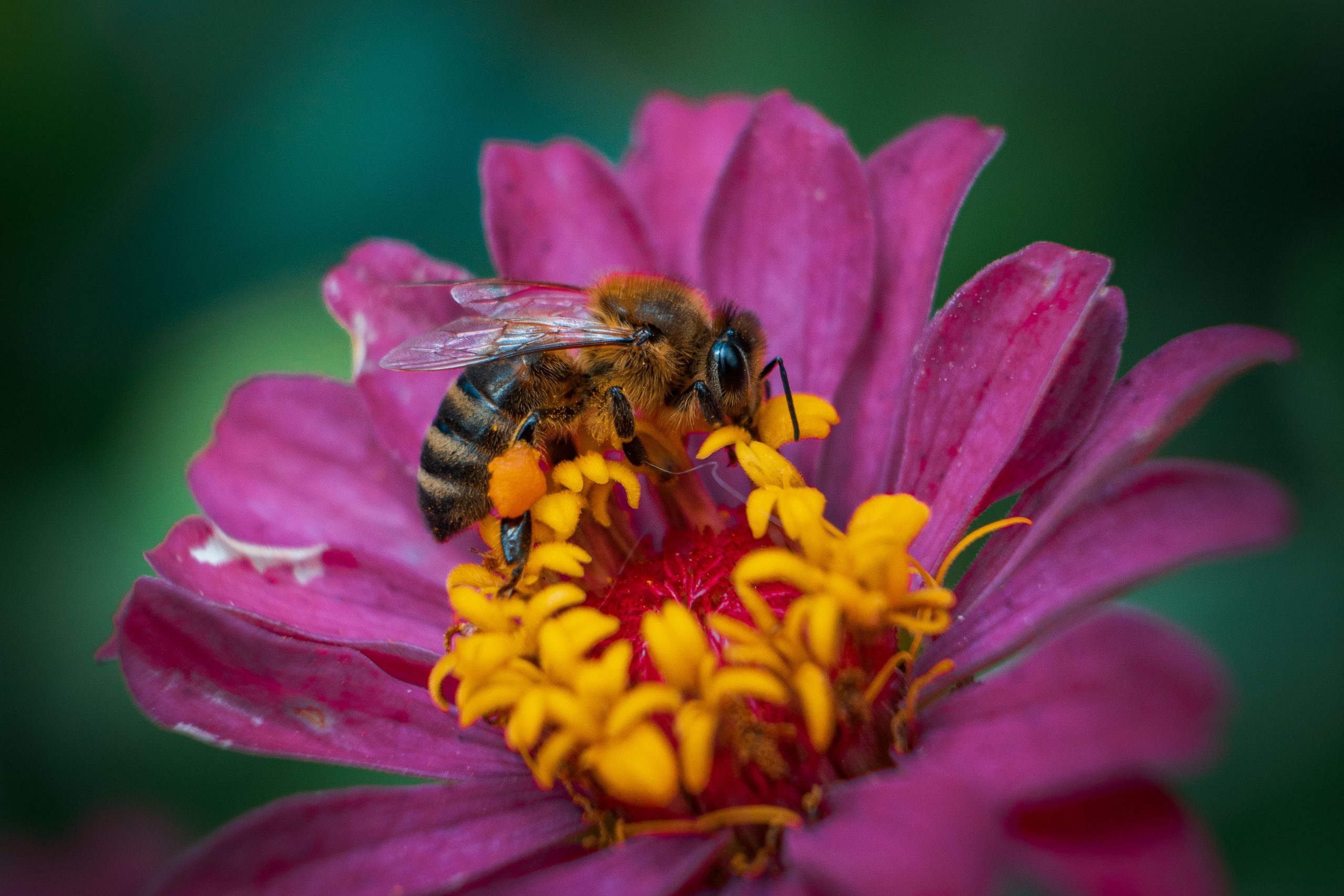
Research over several decades has reported that the electromagnetic fields (EMFs) generated by high-voltage transmission lines can negatively affect pollinators, particularly honeybees, by interfering with navigation, foraging, learning, stress physiology, and pollination efficiency. Because honeybees rely on highly sensitive electrical, magnetic, and sensory cues to locate flowers and communicate within colonies, researchers have raised concerns that chronic exposure to power line-associated EMFs and electric fields could contribute to pollinator decline.
Electric signals from power lines discourage bees from landing on nearby flowers, and there is growing concern that this so-called ‘electric pollution’ could be causing widespread disruption to insect behaviour.
– Honeybees are getting confused by electric pollution from power lines | New Scientist
Rising Environmental EMF Levels from Expanding Power Line, Data Center, and Communications Infrastructure Supporting AI and 6G
Environmental exposure to non-ionizing electromagnetic fields (EMFs) is increasing due to the explosive growth of AI and large-scale data centers. Meeting the unprecedented energy demands of data centers requires a major expansion of electrical grid infrastructure, including new and higher power high-voltage power lines and substations, all of which generate electric and magnetic fields.
While companies claim EMF exposures are safe because they are non-ionizing, they omit that numerous studies have reported biological effects well below current industry limits. Scientific research indicates that just because an exposure is non-ionizing does not mean it is harmless; non-ionizing EMFs have been well linked to biological impacts through oxidative stress and cellular stress responses.
Scientific Evidence Linking Power Line EMFs to Human and Wildlife Impacts
A growing body of scientific research has linked EMF exposure to a range of human health impacts, including increased risks of childhood leukemia, cancer, miscarriage, and neurodegenerative disease. At the same time, while federal regulations do not address animals or plants, significant evidence indicates that EMF exposure can affect wildlife health.
Honeybees rely on highly sensitive electrical, magnetic, and sensory cues to navigate, locate flowers, communicate, and return to their hives. Artificial EMFs produced by transmission lines, substations, and other power infrastructure may interfere with these systems, disrupting essential behaviors that support both colony survival and crop pollination.
Science Reviews on Insects and EMF
A 2023 review on EMF and insects by Thill et al. (2023) published in Reviews on Environmental Health documented decreased reproductive capacity, altered behavior, oxidative stress, DNA damage, and impaired development as well as navigation and orientation disruption.
Over 1,200 research studies on wildlife, flora, and fauna impacts were summarized by Levitt et al. (2021) in “Effects of non-ionizing electromagnetic fields on flora and fauna, Part 2 impacts: how species interact with natural and man-made EMF” published in Reviews on Environmental Health reporting a broad range of impacts, including altered behavior, reproduction, endocrine disruption, and in all species studied “at vanishingly low levels.” The authors detail how bees may be reacting negatively to EMF “through muti-sensory mechanisms to numerous sources of anthropogenic multi-frequency [EMF] interference.”
The authors detail research dating back to the 1970s showing that transmission line electric fields affected honey bees in wooden hives, prompting investigations by the U.S. Bonneville Power Administration and industry researchers. Those subsequent studies found that electric fields from powerlines could induce currents inside hives and lead to numerous effects, including decreased colony weight gains, increased irritability and mortality, abnormal production of queen cells, queen loss, decreased seal brood, and poor over-winter colony survival.
The electric field provides an inhospitable environment to the bees.
– The effects of high voltage transmission lines on bees, 1981
Science on Powerline EMF Impacts to Honeybees
A study published in iScience by Mallinson et al. (2025) found that electric fields at levels well below those generated by high-voltage power line transmission lines significantly alter honeybee foraging behaviors, reducing honeybee floral landings by up to 71%, while negative DC fields had no significant effect.
A study published in Science Advances by Molina-Montenegro et al. (2023) on honeybees and EMFs from high-voltage transmission towers found that the EMF exposure increased stress-related gene expression, reduced honeybee flower visitation, impaired pollination efficiency, and even decreased seed production and plant community richness near the powerlines.
We propose that honeybees’ exposure to EMF disturbs their foraging capabilities by altering their magnetic navigation, learning, decision-making mechanisms, flight, and foraging, thus impairing pollination activity…Our study provides strong evidence of detrimental effects of EMF on honeybee’s visitation and plant reproduction and may contribute to explaining, at least in part, the global pollination crisis that risks the adequate production of many crops.
–Electromagnetic fields disrupt the pollination service by honeybees
A series of studies by researchers at Wroclaw University Poland exposed bees to various EMF intensities reporting a range of impacts. Migdal et al (2020) published in Insects found the electric field exposure impacted the antioxidant system of the honeybee. Migdał P et al. (2021) published in Animals found behavioral disturbances may reduce the efficiency of bees as pollinators, which will translate into a decrease in the efficiency of crop production. Migdal et al (2021) published in PLOS ONE found the impairment of crucial metabolic cycles and alterations to the concentration of important non-enzymatic antioxidants which may indicate a disturbance in protein metabolism and increased muscle activity.
A study published in PLOS ONE by Shepherd et al. (2019) found that short-term in honeybees exposure to powerline EMFs, at levels that could be encountered in bee hives placed under or near power lines, impacted learning and increased aggression levels.
A study published in Scientific Reports by Shepherd et al. (2018) investigating how exposure to ELF EMFs below and near powerline conductors, affects honey bee olfactory learning, flight, foraging activity and feeding found that ELF-EMF exposure significantly reduced bees’ cognitive performance and impaired motor abilities.
ELF EMF exposure was found to reduce learning, alter flight dynamics, reduce the success of foraging flights towards food sources, and feeding. The results suggest that 50 Hz ELF EMFs emitted from powerlines may represent a prominent environmental stressor for honey bees, with the potential to impact on their cognitive and motor abilities, which could in turn reduce their ability to pollinate crops.
EMFs May Increase the Harmful Effects of Pesticides and Other Environmental Stressors in Bees
A study by Lupi et al. (2021) published in Insects monitored honeybee colonies in several experimental conditions for one year and found that combined multi-stress exposure of pesticides plus electromagnetic fields from a high-voltage transmission line caused the most severe biochemical, physiological, and behavioral alterations.
“In this study, the cumulative effect of chemical and electromagnetic field exposure (multi-stress conditions) showed the worst general health condition, considering colony survival, pathology emergence and behavioural anomalies such as abnormal honey storage and excess of drone brood deposition. For the number of queen changes and the queen mortality in the underbasket, double the rate occurred than in the control and even in the chemical-stress site.” – Combined Effects of Pesticides and Electromagnetic-Fields on Honeybees: Multi-Stress Exposure
Could EMFs Interfere with Bees’ Ability to Detoxify Pesticides?
A study published in Environmental Research by Piechowicz et al. (2020) found that exposure to EMFs changed how honey bees broke down and detoxified two pesticides and caused changes to proteins, DNA, RNA, and other important molecules in their bodies.
Together, these findings highlight the urgent need for biologically based EMF exposure limits that consider impacts not only on human health, but also on pollinators and other wildlife essential to ecosystem biodiversity.