
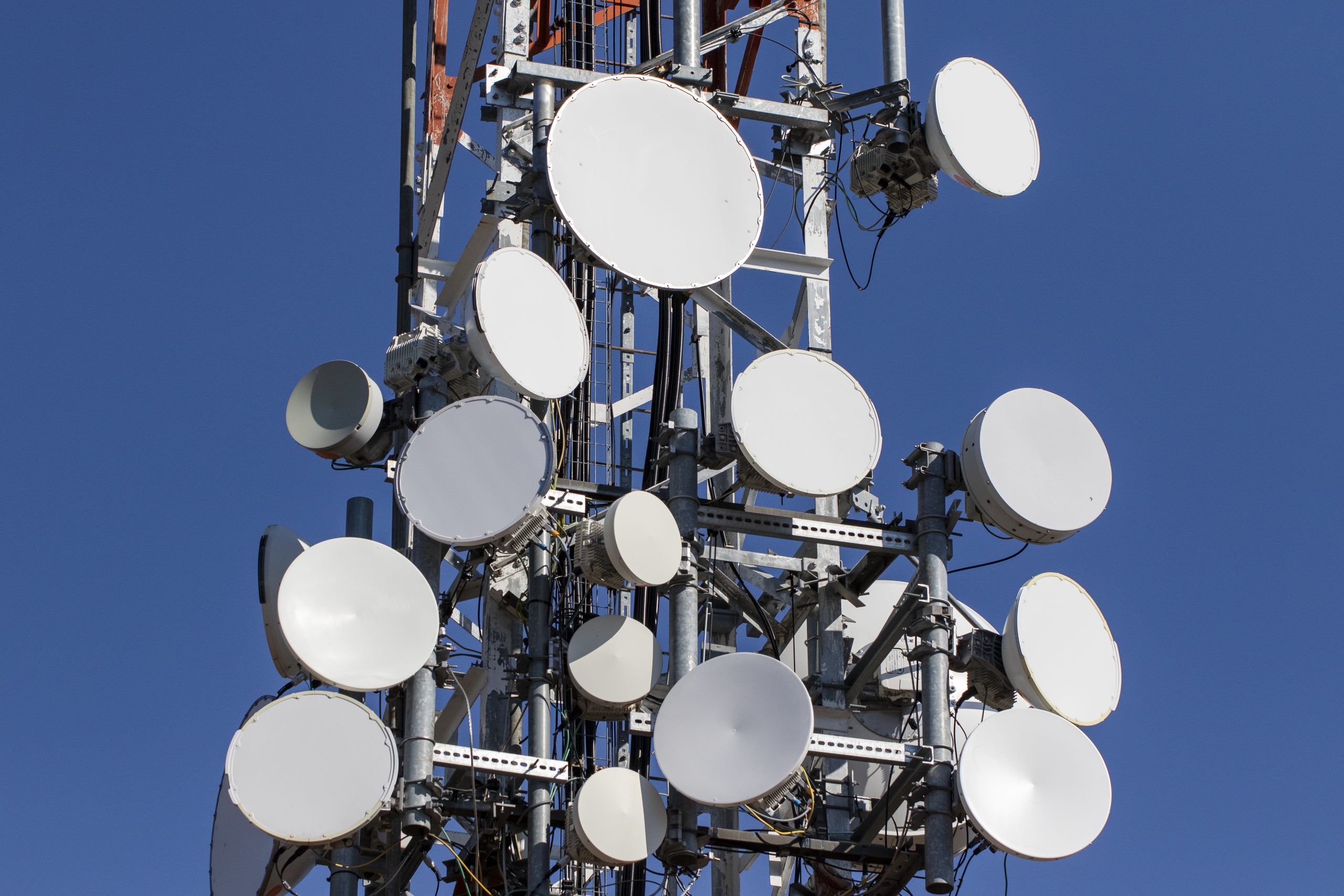
Over 2000 comments filed to preserve local government control for cell towers and wireless deployment.
Nationwide opposition is rapidly mounting against the FCC’s proposed cell tower fast-track rules in Build America: Eliminating Barriers to Wireless Deployments (WT Docket No. 25-276). If adopted, the new FCC rules would shift significant power away from local city, state and county governments to the federal government, dramatically reducing community input, zoning protections, and the ability of cities, counties, and residents to shape where and how wireless facilities are deployed.
Organizations Warn of Health Risks, Property Impacts, and Loss of Community Protections
A wide range of scientific, public health, environmental, consumer, and local government organizations have formally warned the FCC that these rules would fast-track cell towers into communities while stripping away essential local protections. Their filings highlight the wide range of cell tower health risks, along with impacts to community aesthetics, property values, and the loss of local control over land-use decisions.
Cities and Counties Push Back Against Federal Preemption
Major associations representing cities and counties—including the National League of Cities (NLC), National Association of Counties (NACo), U.S. Conference of Mayors (USCM), National Association of Telecommunications Officers and Advisors (NATOA), California State Association of Counties (CSAC), League of California Cities (Cal Cities), and the Rural County Representatives of California (RCRC)—have urged the FCC to withdraw or substantially revise the proposal. In official filings, they warn that accelerated timelines, federal preemption, and “deemed granted” approvals would erode local control, weaken public safety oversight, undermine democratic accountability, and shift liability, cost, and risk onto communities.
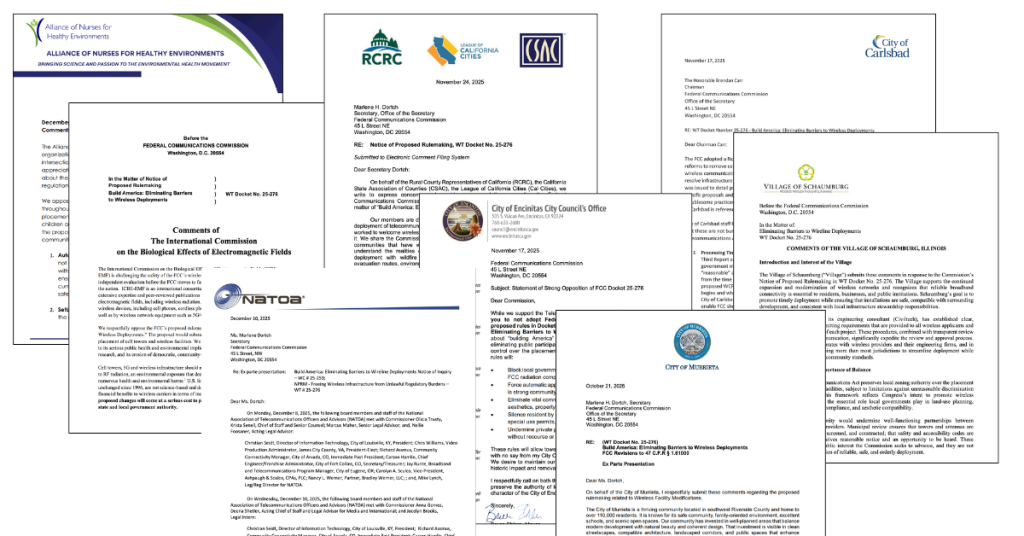
As of December 20, 2025, more than 2,100 comments had already been filed with the FCC, including thousands from members of the public. Many submissions document that cell towers pose significant health, safety, and property value risks, and emphasize that U.S. RF radiation exposure limits—unchanged since 1996—are outdated, not science-based, and fail to adequately protect public health, children, or the environment.
U.S. and International Scientists Warn FCC Against Fast-Tracking Cell Towers
The International Commission on the Biological Effects of Electromagnetic Fields (ICBE-EMF), an international consortium of physicians and scientists, has formally cautioned the FCC in its comments that cell towers, 5G and wireless infrastructure should not be fast-tracked as this will increase public exposure to RF radiation, an environmental exposure that decades of scientific research has associated with numerous health and environmental impacts. The ICBE-EMF also wrote U.S. Senators ahead of the December 17 Senate Committee on Commerce, Science, and Transportation FCC oversight hearing, urging them to question the FCC’s continued reliance on outdated cell tower and wireless radiation limits and its failure to ensure adequate oversight, transparency, and enforcement.
The ICBE-EMF letter states, “the FCC’s exposure limits, unchanged since 1996, are not science-based and do not protect the public. They ignore decades of peer-reviewed research showing biological harm at levels far below those that cause heating.”
The FCC Has Not Complied with a Federal Court Order
Environmental Health Sciences (EHS), a science-based environmental health nonprofit, also submitted formal comments focused on the FCC’s failure to comply with the U.S. Court of Appeals for the D.C. Circuit’s 2021 decision in Environmental Health Trust et al. v. FCC, which required the agency to explain how its wireless radiation limits protect against long-term, non-thermal harms. EHS sent a letter to U.S. Senators urging them to examine the FCC’s lack of transparency, monitoring, compliance, and enforcement for cell towers and wireless infrastructure, noting that the agency has no meaningful system to verify compliance with its own limits. The letter details the FCC’s refusal to release cell phone radiation test data from the FCCS laboratory tests of the Apple iPhone 12. The questions raised in the letter were not raised by Senators during the hearing.
Environmental Health Sciences regularly reviews the FCC docket and has compiled a sampling of the official filings from organizations and local governments to help communities understand what is at stake and share these concerns with their own elected officials.
Comments are due December 31, 2025. Reply Comments are due January 15, 2026.
This is the time to take action.
Submit Comments to the FCC: Environmental Health Sciences has created a dedicated webpage, “How to Submit to the FCC,” with clear instructions for submitting comments to the FCC, whether you choose to file a short comment, a longer formal submission, or use our one-step online tool. We also have text for your submissions.
Educate Yourself: Watch our webinar and download our factsheets.
This is a critical moment. The FCC must hear from as many people as possible.
Environmental Health Sciences (EHS) is a scientific nonprofit organization focused on environmental health issues. Our Wireless and EMF Program works to create and disseminate knowledge resources that increase understanding of the health and ecological risks posed by wireless and other non-ionizing EMF exposures, counter industry misinformation, promote safer technology, and support meaningful policy change. Sign up for our Wireless and EMF Program newsletter.